
What the Research Actually Says About Perineal Massage — And Why It's Worth Talking About in Class
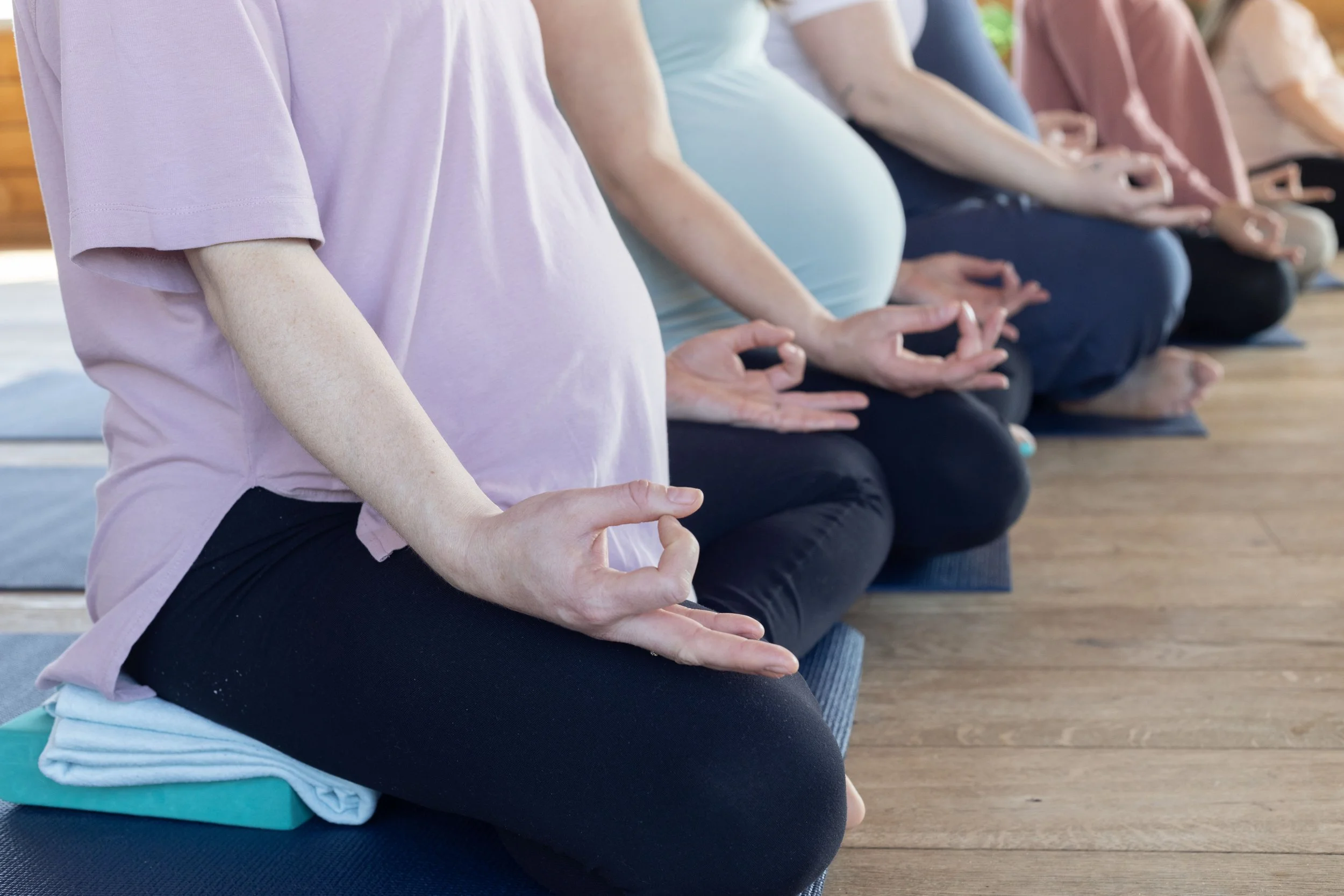
Pregnant women in a LushTums Pregnancy Yoga Class
Most pregnant women have heard of perineal massage. Some have been told to do it by their midwife. A few have actually started. And a significant number have googled it, felt a bit awkward and quietly moved on.
As pregnancy yoga teachers, we're in a unique position — we have the relationship, the trust and the space to actually talk about it. And when we do, it helps to know what the evidence says. Not in a clinical, clipboard-waving way. But in the warm, informed, here's-what-we-actually-know way that our students deserve.
So let's look at the Cochrane Review — the gold standard of evidence-based medicine — and see what it really tells us.
What the Cochrane Review Found
The Cochrane Review on antenatal perineal massage (Beckmann & Stock, most recently updated in 2022) analysed four randomised controlled trials involving nearly 2,500 women. These were good quality studies. The findings are worth knowing.
The headline: women who practised perineal massage during pregnancy in the last few weeks were less likely to experience perineal trauma at birth. Specifically, they were less likely to need an episiotomy and less likely to need suturing overall.
Here's what the numbers actually look like:
9% overall reduction in trauma requiring suturing — for every 15 women who massage regularly, one fewer will need stitches.
16% reduction in episiotomy — for every 21 women who massage, one fewer will have an episiotomy.
Women who massaged around once or twice a week from 35 weeks saw the most benefit. (Interestingly, massaging more frequently — over 3.5 times a week — showed no statistically significant reduction. Which tells us this isn't about doing more; it's about doing it consistently.)
There's an important nuance here and it's one worth sharing with your students honestly.
These benefits were statistically significant only for women having their first vaginal birth. For women who had already given birth vaginally, the reduction in physical trauma wasn't statistically significant.
But — and this is lovely — women who had previously birthed vaginally reported something else: a significant reduction in perineal pain at three months postpartum. So even for second or subsequent-time birthers, there may well be real benefit. It just shows up differently.
The Nuance That Changes Everything
Here's the thing the headline stats don't quite capture: when the researchers dug into why trauma was reduced, they found that the decrease in suturing was almost entirely driven by a reduction in episiotomies — not in spontaneous tears.
There was no statistically significant reduction in first, second, third or fourth-degree tears.
What this tells us is that perineal massage may influence clinical decision-making, or that a more prepared, flexible perineum is simply less likely to be cut. Either way, it's meaningful. But it also means we should be careful not to frame perineal massage to our students as a guarantee against tearing — because the evidence doesn't support that.
What it does support is this: it's safe, it's generally well-tolerated, it reduces the likelihood of episiotomy and for many women, it reduces ongoing discomfort after birth. The Cochrane Review is clear that women should be made aware of the likely benefits and given information on how to do it. This is exactly the kind of evidence-based birth preparation we can weave into every pregnancy yoga class.
What to Say in Class
This is the bit I love — because pregnancy yoga class is actually the perfect place to normalise this conversation. We're already talking about the perineum. We're already doing breathwork and pelvic floor awareness. We're already creating a space where the body isn't something to be embarrassed about.
A few things I'd encourage you to weave in:
Normalise it without prescribing it. Not every woman will want to do perineal massage and that's completely fine. Our job isn't to add to their to-do list — it's to give them information so they can make their own informed choices.
Be honest about what it can and can't do. It's not a magic shield against tearing. But it's a simple, low-risk practice that may reduce their chances of episiotomy and may leave them more comfortable postnatally. That's worth knowing — and it's the kind of grounded, evidence-informed guidance that sets a good pregnancy yoga teacher apart.
Connect it to what they're already doing. The breath awareness, the perineal softening, the ability to release rather than brace — these are all part of the same picture. Perineal massage is an extension of the body literacy we build together in class.
Point first-time birthers towards it particularly. The evidence is clearest for women having their first vaginal birth. If you're going to recommend it to anyone, prioritise this group.
If you're pregnant and looking for pregnancy yoga classes near you, find your nearest LushTums teacher and come and experience this kind of informed, embodied birth preparation for yourself.
And if you're a yoga teacher who wants to be able to have these conversations with real confidence — grounded in the evidence and held within a warm, skilled practice — our Pregnancy Yoga Teacher Training is open for enrolment.
A Gentle Reminder for Us as Teachers
We're not here to replace the advice of midwives, doctors or physiotherapists. If students have questions about how to do perineal massage, we can signpost them toward their Lead Maternity Carer or a good evidence-based resource. Our role is to hold the space for the conversation to happen at all — and to help women feel informed and confident in their own bodies.
And that? That's exactly what our LushTums pregnancy yoga is for.
By Clare Maddalena, LushTums Founder
Want to go deeper into the evidence base for pregnancy yoga teaching?
Our Pregnancy Yoga Teacher Training covers birth physiology, clinical awareness and how to bring evidence-informed practice into every class you teach.
Clare Maddalena is the founder of LushTums and a Senior Yoga Teacher, Doula and Antenatal Educator with nearly twenty years of experience working with pregnant women and new mothers.